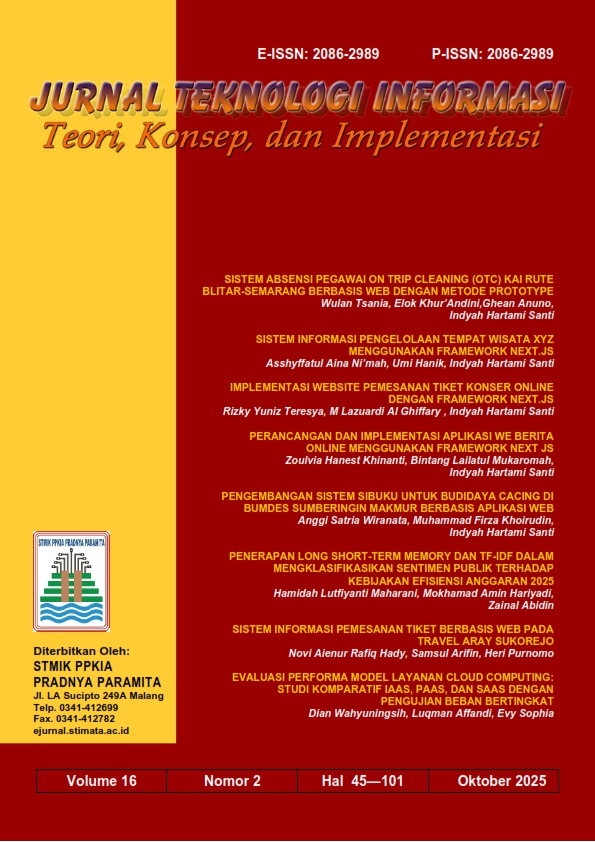
Sistem Informasi Pengelolaan Tempat Wisata XYZ Menggunakan Framework Next.js
DOI:
https://doi.org/10.36382/jti-tki.v16i2.576Keywords:
Application Programming Interface; Digital Transformation; Destination Management; Next.js; Prisma ORM; Digital PaymentAbstract
Tourism plays an important role in driving regional economic growth, especially in areas with natural potential that has not been optimally developed. XYZ Tourism is one of the destinations that offers natural attractions such as tea plantations, waterfalls, and camping areas. However, the management of this destination is still carried out manually, resulting in problems such as difficulties in ticket booking, visitor data recording, and financial transactions that are inefficient. This research aims to design and develop a modern and efficient web-based tourism management information system along with an API to address these issues. The system is built using Next.js as the frontend framework, Prisma as the ORM for database management, and is integrated with Midtrans for digital payment processing. This system also provides an API to facilitate integration with other services or applications in the future. The results of the system development show increased operational efficiency, easier access for visitors, and higher accuracy in managing visitor data and transactions. This system is expected to support digital transformation in the local tourism sector and enhance the competitiveness of tourist destinations in the digital era.
References
[2] Hadi, S. (2019). Pengelolaan Destinasi Wisata Alam. Bandung: Alfabeta.
[3] Yulianto, A. (2021). Sistem Informasi dan Transformasi Digital. Surabaya: Unesa University Press.
[4] Susanto, E. (2018). Teknologi Informasi dalam Pengelolaan Pariwisata. Jakarta: Prenada Media.
[5] Ismayanti. (2010). Pengantar Pariwisata. Jakarta: Grasindo.
[6] Prabowo, H. (2020). E-Commerce dan Payment Gateway. Bandung: Informatika.
[7] Rohmah, N. (2022). Pengembangan API untuk Aplikasi Web. Yogyakarta: Andi.
[8] Midtrans. (2023). Panduan integrasi pembayaran online untuk UMKM dan wisata lokal. Jakarta: Midtrans Indonesia.
[9] Sari, D. N., & Wibowo, H. (2023). Efektivitas sistem pemesanan online terhadap kepuasan pengunjung tempat wisata. Jurnal Manajemen Pariwisata, 11(3), 55–63.
[10] Prasetyo, B. (2017). Manajemen Pariwisata Berbasis Komunitas. Yogyakarta: Pustaka Pelajar.
[11] Lestari, R. (2015). Strategi Pemasaran Digital untuk Industri Pariwisata. Jakarta: Erlangga.
[12] Nugroho, A. (2016). Teknologi Informasi dan Komunikasi dalam Pariwisata. Bandung: CV. Mandar Maju.
[13] Santoso, D. (2014). Dasar-dasar Pariwisata. Surabaya: Airlangga University Press.
[14] Harahap, R. (2018). Manajemen Destinasi Pariwisata. Jakarta: Rajawali Pers.
[15] Wibisono, T. (2019). Transformasi Digital dan Inovasi dalam Pariwisata. Malang: UB Press.
Downloads
Published
Issue
Section
License
Copyright (c) 2026 Umi Hanik, Asshyffatul Aina Ni’mah

This work is licensed under a Creative Commons Attribution 4.0 International License.