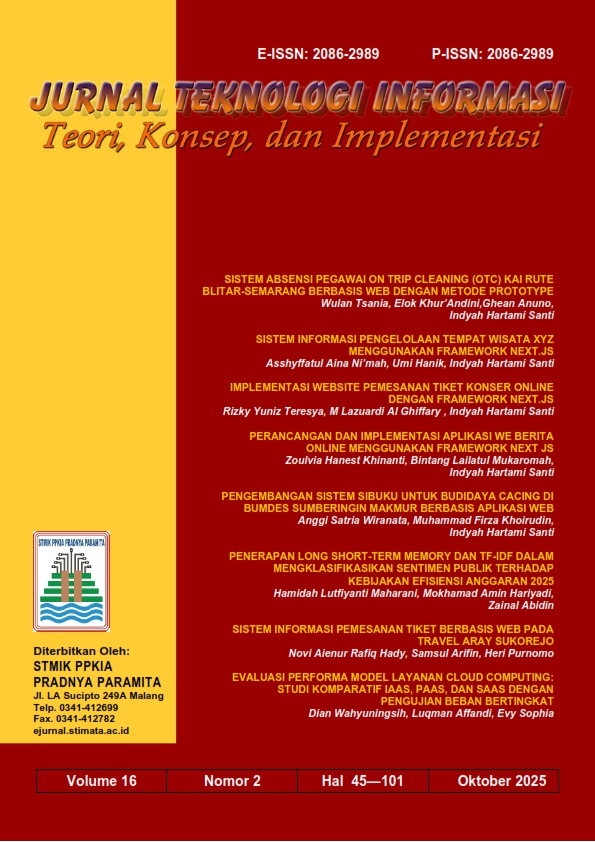
Cloud Computing, IaaS, PaaS, Saa EVALUASI PERFORMA MODEL LAYANAN CLOUD COMPUTING: STUDI KOMPARATIF IAAS, PAAS, DAN SAAS DENGAN PENGUJIAN BEBAN BERTINGKAT
DOI:
https://doi.org/10.36382/jti-tki.v16i2.625Kata Kunci:
Cloud Computing, IaaS, PaaS, SaaAbstrak
Cloud computing telah menjadi paradigma fundamental dalam transformasi digital, menawarkan tiga model layanan utama: Infrastructure as a Service (IaaS), Platform as a Service (PaaS), dan Software as a Service (SaaS) [1]. Penelitian ini mengkaji performa komparatif ketiga model layanan cloud computing melalui pengujian beban bertingkat dengan lima skenario berbeda (50, 200, 500, 1000, dan 2000 concurrent users). Menggunakan metodologi eksperimental dengan Apache JMeter sebagai alat pengujian, penelitian ini menganalisis metrics kritis seperti response time, throughput, CPU utilization, memory usage, error rate, dan availability [2]. Hasil pengujian menunjukkan bahwa PaaS memberikan performa superior dengan rata-rata response time 532.2 ms dan throughput 2562 req/s, melebihi IaaS (597.0 ms, 2428 req/s) dan SaaS (656.0 ms, 2342 req/s). Dalam hal efisiensi resource, PaaS menunjukkan CPU utilization optimal (68.2%) dan memory usage terendah (5.16 GB) [3]. Analisis cost-performance ratio mengungkapkan bahwa PaaS memiliki rasio terbaik (0.0041-0.0103), diikuti SaaS dan IaaS. Temuan ini memberikan panduan praktis bagi organisasi dalam memilih model cloud computing yang sesuai dengan kebutuhan teknis dan finansial mereka [4].
Referensi
[1] Younis, R., et al. (2024). A Comprehensive Analysis of Cloud Service Models: IaaS, PaaS, and SaaS in the Context of Emerging Technologies and Trends. [1]
[2] Qadi, M.J., & Harbi, I.M. (2024). An Overview of Cloud Computing Systems. [4]
[3] Mahajan, J., & Kaur, J. (2025). Structural and Functional Perspectives on Cloud Service Models: A Review. [6]
[4] Devi, P. (2024). Literature Review on Cloud Computing: A Paradigm Combining Service-Oriented Architecture with Internet-Based Solutions. [7]
[5] Kokate, D., et al. (2025). Navigating the World of Cloud Computing: What Growing Businesses Need to Know. [8]
[6] Kurniawan, A.P., et al. (2023). Performance Evaluation for Deploying Dockerized Web Application on AWS, GCP, and Azure. [2]
[7] Alzboon, G., & Ahmad, A.A. (2022). A Performance Evaluation Approach for n-tier Cloud-Based Software Services. [11]
[8] Wang, Q., et al. (2023). KeenTune: Automated Tuning Tool for Cloud Application Performance Testing and Optimization. [18]
[9] Kaushik, P., et al. (2021). Cloud Computing and Comparison based on Service and Performance between Amazon AWS, Microsoft Azure, and Google Cloud. [10]
[10] Sathar, G., et al. (2025). Cloud Computing for Big Data Analytics: Scalable Solutions for Data-Intensive Applications. [3]
[11] Saleh, R., & Kusrini, K. (2025). Analisis Perbandingan Kinerja Web Humas Infrastruktur On-Premise dan Cloud Computing dengan Load Balancer Round Robin. [12]
[12] Nadeem, F. (2022). Evaluating and Ranking Cloud IaaS, PaaS and SaaS Models based on Functional and Non-Functional Key Performance Indicators. [13]
[13] Hasan, R.A., & Hameed, T.M. (2025). Optimizing Cloud Computing: Balancing Cost, Reliability, and Energy Efficiency. [5]
[14] Smirnova, T., et al. (2024). Research of Cyber Security Technologies of Cloud Services IaaS, PaaS and SaaS. [16]
[15] Wulf, F., et al. (2021). IaaS, PaaS, or SaaS? The Why of Cloud Computing Delivery Model Selection. [14]
[16] Akawuku, G.I., et al. (2025). Software Engineering Dimensions: Empirical Frameworks on Microservices Architecture in Cloud Computing Domains. [15]
[17] Ahmed, S. (2025). Evaluating the Role of Edge Computing in Reducing Latency and Enhancing Efficiency in Cloud-Based Data Storage and Access. [17]
Unduhan
Diterbitkan
Terbitan
Bagian
Lisensi
Hak Cipta (c) 2026 Dian Wahyuningsih, Luqman Affandi, Evy Sophia

Artikel ini berlisensi Creative Commons Attribution 4.0 International License.